Kids In Action for Biological Control
 About Us
Using Classical Biological Control (biocontrol) to conserve critical habitat for Waterfowl and Wildlife
Conservation Education Where youth and communities can engage with Federal, State, and local invasive species and biological control scientists by participating in local scientific projects focused around Classical Biological Control methods.
Background
Carla Hoopes and InterMedia Productions PLLC partnerships lead an effort in northern Utah called Kids In Action. The program priority brings science teachers, students, and volunteers to state parks, forest lands, and natural areas to inspire the next generation of kids and communities to get out in the natural world with scientists.
Kids In Action projects engage biological control practitioners and communities in local project, where they observe interactions among insects, plants, and invasive species. Kids and communities get to know fun things about what scientists do -- creepy crawly things like bugs and weeds; and find themselves more engaged in the natural environment through these activities. These connections between kids and scientists shape the overall objective to get communities out having fun learning all they cn ab out the work of scientists, such as Forest Service entomologists, who deal with biological control of invasive species.
Conservation Education generates fun and scientifically sound activities, or in other words, places scientific work into the lens of the conservation educators engaging interactions. Kids In Action during FY2021 will participate on a team comprised of youth and conservation educators and Forest Service scientists to review and further guide the development to ensure curriculum an activities are transferable across other regions. This expected outcome is to get scientists out to experience Kids In Action activities and ultimately generate a mechanism for biological control practitioners to engage kids in fun ways in their projects. The expectation is to generate a means to engage communities and kids by identifying opportunities to witness and participate with biological control practitioners in local areas.
Students are exposed to classical biological control protocol for managing invasive plants (e.g., standardized impact monitoring in demonstration sites) and investigate relevant topics such as rearing insects for release in wetlands and overwintering survival in high elevation sites that have colder temperatures. Kids In Action engagements in parks and recreation areas stimulate youth exposure to real life issues, and generate real science skill sets that influence future choices such as natural resources careers, summer work, and community service.
2018-2019 EVENTS
October 9-10, 2019
West Point Junior High School Science Honors Program 7th-9th Grades (200 Students) at Eccles Wildlife Education Center at Farmington Bay
EWEC Kids in Action Draft Agenda — Oct 9 & 10, 2019 Media:EWECDraftAgenda2019.pdf
The Utah Division of Wildlife Resources and Eccles Wildlife Education Center and West Point Junior High School Science Honors Program implemented a Purple Loosestrife Biological Control workshop on October 9 and 10, 2019 for 200 7th-9th Grade Science Honors and Honors Biology Students at Farmington Bay. The service learning, conservation education, and biological control investigation engaged Kids In Action for Biological Control continuing partners from Davis and Cache County Weed Programs, Utah Weed Supervisors Association, USDA Forest Service Forest Health Assessment & Applied Sciences Team and Forest Health Protection Ogden Field Office.
Sixteen West Point JHS honors students earned certificates by pre-workshop study using the guides provided here. These Certified Level II: Team Lead students' certificates (see details below in Certification Training for Students and Volunteers) allowed them to lead small teams (supervised by KIABC staff) during the October 9 and 10 workshop when ~145 science honors and biology students participated. Science Honors 7th and 8th Graders participated on October 9 while 9th Grade Honors Biology students participated on October 11.
Study guides were provided with curriculum geared for all of the 7th to 9th Graders who conducted a real scientific investigation at Farmington Bay. The data they collect ed is used by land managers, and a long-term investigation by West Point Junior High School students to better understand changes in plant and insect populations using the Classical Biological Control protocol for Purple Loosestrife (invasive Plant) and the purple loosestrife bio-agents (beetles) Galerucella calmariensis and G. pusilla.
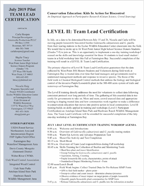
Click on the image below to access Pre-Workshop Study Guide Materials
 :
 :
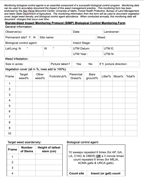
Pre-Workshop Study Guide : Purple Loosestrife Publication : SIMP Monitoring Form
Kids In Acton for Biological Control at Hardware Ranch Wildlife Management Area
September 3-5, 2019

SilentInvaders-LessonPlan 2018 N Haig.pdf
Edith Bowen Laboratory School Workshop at Hardware Ranch Wildlife Management Area
Photo Page [[1]]
Utah Division of Wildlife Resources at Hardware Ranch Wildlife Management Area (WMA) is partnering with the Utah State University's Edith Bowen Laboratory School and Cache County to sponsor 4th and 5th Grade students in scientific investigation of invasive plants and their biological controls (natural predators).
The USDA Forest Service publications for three invasive plants are provided here for those students, teachers, parents, and community volunteers (Level II: Kids In Action Team Leaders) who may participate during the upcoming event. The agenda will be posted soon. In the meantime, those participants who want to study-up on particular insects that feed on invasive plants at Hardware Ranch WMA are invited to skim through three documents to focus in on the following biological control insects:
Click on the plant name to access the USDA Forest Service Health Technology Team publication for each species
1. Canada thistle ExoticTrueThistles.pdf|link=https://www.fs.fed.us/foresthealth/technology/pdfs/ExoticTrueThistles.pdf
and one of its Classical Biological Control Agents the Hadroplontus litura Canada thistle stem boring weevil
2. Spotted knapweed Knapweeds.pdf|link=http://bugwoodcloud.org/resource/pdf/Knapweeds.pdf
and one of it's Classical Biological Control Agents the Cyphocleonus achates knapweed root boring weevil)
3. Dalmatian toadflax Toadflax_FHTET_2016-01.pdf|link=http://bugwoodcloud.org/resource/pdf/Toadflax_FHTET_2016-01.pdf
and one of its Classical Biological Control Agents the Mecinus janthiniformis toadflax stem mining weevil
Certification Training Opportunity for Students and Volunteers
July 12, 2019
Farmington Bay's Eccles Wildlife Education Center a Success
Click this image to download the report as pdf 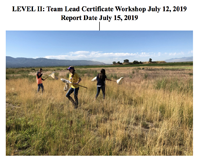
A new Kids In Action for Biological Control pilot project was implemented in 2019 in partnership with the USDA Forest Service and Utah Division of Wildlife Resources at the Eccles Wildlife Education Center in Farmington Bay. Students assisted in rearing the purple loosestrife biocontrol beetles Galerucella calmariensis and G. pulsilla at their schools and in the Education Center classroom, while a citizen science component is in the planning stages for a pilot project in the Fall with West Point Junior High School Science Honors Students Grades 7-9. Students took responsibility for tracking changes in plant and insect populations over time in a 300-400 acre system of trails and waterways adjacent to the Robert N. Hasenyager Great Salt Lake Nature Reserve in Farmington City. Participants make meaningful connections to the outdoors through education and find solutions that reduce negative impacts of invasive plants.
Sixteen 7th-9th Grade Science Honors Students from West Point Junior High School participated in the Level II: Team Lead Certification workshop on July 12, 2019. All sixteen students prepared using the study guide materials shown below. All sixteen students "wanted" to be there and showed it in their preparation and leadership skills throughout the workshop. The Certification Test Overview, Study Guide and Agenda for the training and testing provided just the right amount of activities and field implementation to develop team leaders for small teams who implemented Classical Biological Control (biocontrol) methods within larger groups such as the 135 junior high school science honors students who participated at Farmington Bay in October 2019. In recent workshops, teachers and trainers served as small team leaders. In 2019 we developed students and volunteers to test for Certification as small team leaders in future years (e.g., West Point Junior High School Science Honors Students as they progress through the program; local wildlife and birding groups) who collect data relevant to changes in waterfowl and wildlife populations and behavior relevant to changes in purple loosestrife and biocontrol populations over long periods of time.
Click on the image to access Pre-Workshop Study Guide Materials and Agenda, which includes the Level II: Certification Test Overview
: :
Agenda/Team Lead Certification Study Guide : Purple Loosestrife Publication : SIMP Monitoring Form
Recent Classroom and Field Workshops
Kids In Action for Biological Control on Antelope Island State Park, Utah 2018.
Approximately 150 Science Honors 7th-9th Grade Students from West Point Junior High School in Syracuse, Utah and 55 9th Grade Students from Ascent Academies of Utah, West Jordan participated in Kids In Action workshops at Antelope Island State Park in 2018. Partners include the USDA Forest Service Forest Health Assessment and Applied Sciences Team, Utah Department of Agriculture and Food Invasive Species Mitigation Program, Weber River Cooperative Weed Management Association, West Point Junior High School, Utah Division of Wildlife Resources, Antelope Island State Park, and adjacent private and public land managers).
Watch this video produced by West Point Junior High School of field days at Antelope Island State Park.
https://www.youtube.com/watch?v=3fDZeh-y_vg&feature=youtu.be

Kids In Action for Biological Control at Hardware Ranch Wildlife Management Area, Logan, Utah 2016
View 4th Grade Students from Utah State University's Edith Bowen Laboratory School at
Hardware Ranch Wildlife Management Area.
https://www.youtube.com/watch?v=TkZaHNTMxOU

 :

Tribal Outreach Pages 1-8 InterMedia Newsletter 2011 pg1-8.pdf
Tribal Outreach Pages 9-16 InterMedia Newsletter 2011 pg9-16.pdf
Youth Biological Weed Control Education Programs in the Intermountain West
 :
 :
 :
 :

- Content for Biocontrol in Your Backyard is provided by individual program sponsors.
- Content is formatted and uploaded by InterMedia
- The Biocontrol In Your Backyard Portal collaboration with The Bugwood Network and its content accessible
- format are sponsored by USDA Forest Service, Forest Health Protection, Forest Health Assessment and Applied Sciences Team.
This institution is a equal opportunity provider.
InterMedia Productions
Professional LLC
PO Box 11595
Bozeman, MT 59719
