HPIPM:Head Clipper Weevil
Author: Frank B. Peairs[1]
Field Biology and Identification
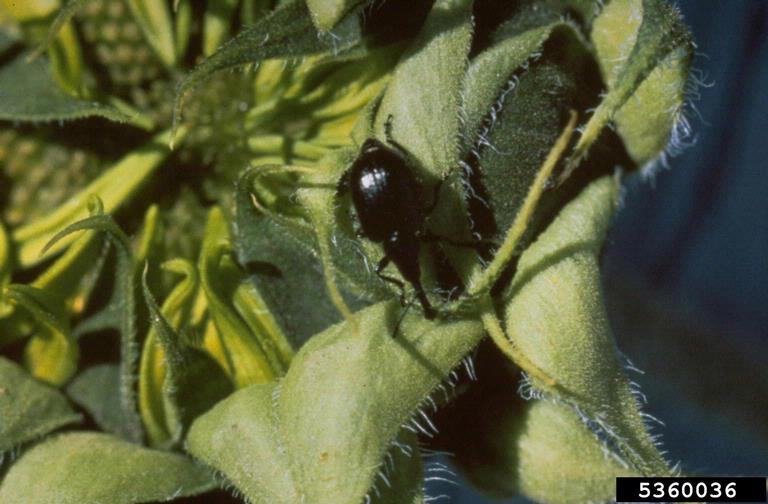
The adult head‑clipper weevil, Haplorhynchites aeneus (Boheman), is shiny black, measuring about eight millimeters (5|16 in.) from the tip of the snout to the rear of the abdomen. Larvae are cream colored, C-shaped and grub‑like in appearance. Adults emerge in mid July and may be found on plants for a two to three week period. The females feed on pollen and nectar of flowering heads. After making a series of punctures around the circumference of the stalk just below the head, the female lays an egg in the head. The girdled head falls to the ground where the larvae develop and overwinter inside the fallen head.
Plant Response and Damage
The percent of "clipped heads" is usually very low but may reach 20 percent in some fields. Damage is often limited to field margins.
Management Approaches
Chemical Control
When scouting, sample sites should be 75 to 100 feet from the edge of the field. Use an "X" pattern, counting weevils on five heads per sampling site for a total of 25 heads. A threshold level has not been determined.
The information herein is supplied with the understanding that no discrimination is intended and that listing of commercial products, necessary to this guide, implies no endorsement by the authors or the Extension Services of Nebraska, Colorado, Wyoming or Montana. Criticism of products or equipment not listed is neither implied nor intended. Due to constantly changing labels, laws and regulations, the Extension Services can assume no liability for the suggested use of chemicals contained herein. Pesticides must be applied legally complying with all label directions and precautions on the pesticide container and any supplemental labeling and rules of state and federal pesticide regulatory agencies. State rules and regulations and special pesticide use allowances may vary from state to state: contact your State Department of Agriculture for the rules, regulations and allowances applicable in your state and locality.
