HPIPM:Cutworms Sorghum
Authors: John B. Campbell & Frank B. Peairs[1]
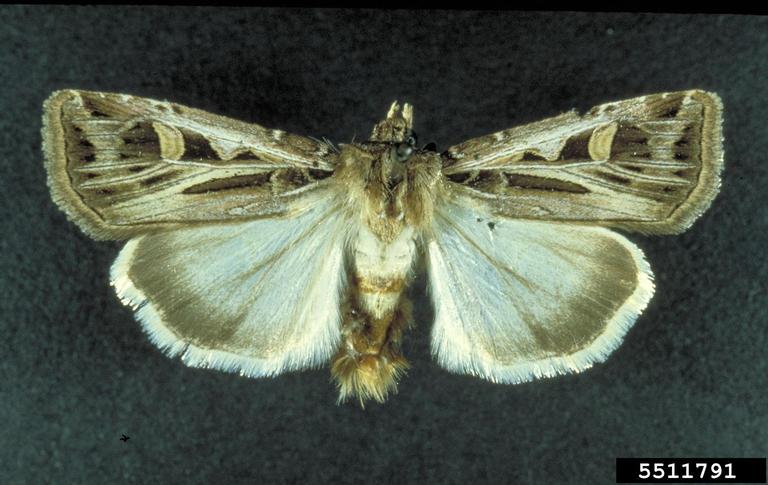

Identification (and life cycle/seasonal history)
The dingy cutworm, Feltia jaculifera (Guenee), is a pale grayish-brown that may have a reddish-brown tinge. There are faint, dark, V-shaped markings on the back of each abdominal segment. The darksided cutworm's, Euxoa messoria (Harris), subdorsal coloration includes a narrow, dark-brown stripe followed ventrally by a broad pale stripe and below this is a dark brown stripe just above the spiracle.
These two species have one generation per year. Eggs are deposited on the stems of grasses and weeds or behind the leaf sheath. Egg hatch occurs in two days to two weeks dependent on the species and temperatures. They may feed some in the fall. As the weather turns colder, they seek shelter under clods or in the debris of the weedy plants. In the spring as temperatures warm, they again become active and feed until the larval growth is completed. They then tunnel down in the soil to pupate. When the adults emerge, they exit via the tunnel made by the larvae.
Plant Response and Damage
The effectiveness of current Bt corn hybrids is unknown. The dingy or dark sided cutworms may cause damage to sorghum particularly in areas of the field that may have been weedy the preceding fall. The cutworms overwinter as larvae and tend to feed more on leaves rather than cut stems at the soil surface. They sometimes are referred to as "climbers" since they crawl up the stalk and feed on the leaves. They may cut off plants at or just below the soil surface.
Management Approaches
Cultural Methods
Weed control in the late summer or fall will be beneficial. The cutworm moths are attracted to grassy or weedy areas for egg deposition.
Economic thresholds
Early detection of their presence is essential. Plants with leaf feeding or that have been cut off at ground level should be checked for the presence of cutworms. They should be in the soil around the damaged plants. Generally, only seedling plants will be damaged by cutworms.
Generally sorghum, even in dryland or ecofallow systems, is planted at population levels that can tolerate considerable loss without realizing a yield reduction. In addition, a sorghum plant will sucker which replaces the lost or damaged stalk.
Chemical Control
Control generally is not considered to be economical in sorghum. Crusting or dry surface soil can reduce control with some materials, which can be counteracted by rotary hoeing immediately before or after the application. Pyrethroids have performed better without incorporation in most studies.
Due to constantly changing labels, laws and regulations, the sponsors of this web site assume no liability for the suggested use of any chemicals noted in the management section. Contact your local pest management personnel for current information on labeled pesticides that can be used for the intended plant disease, insect pest or weed.
