HPIPM:Carrot Beetle
Author: Frank B. Peairs[1]
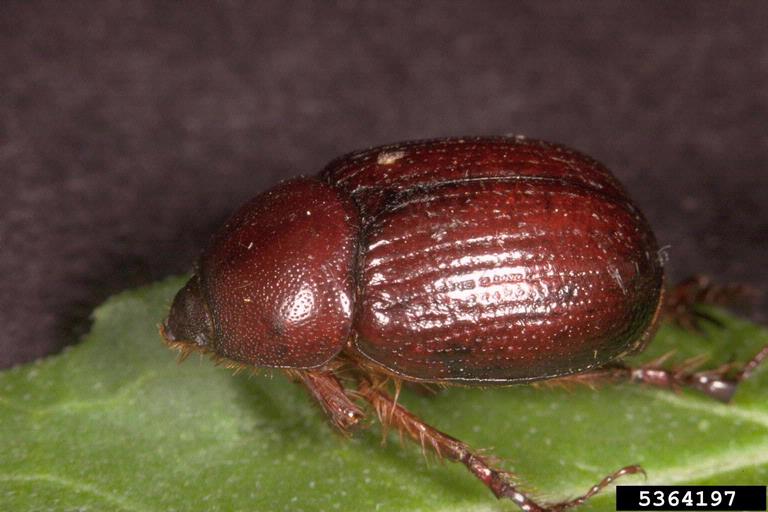
Field Biology and Identification
A moderate size 13 to 17 millimeter (1/2 – 11/16 inch), oblong‑ovate, dark reddish‑brown to black beetle. Wing covers have longitudinal depressed furrows with punctures. Adult beetles overwinter in the soil and emerge in the spring to lay eggs. The larvae are C‑shaped and white, resembling common white grubs. They feed on grasses and decaying vegetation in the soil but will attack the roots of crops.
Plant Response and Damage
The second‑brood adults feed two to 13 centimeters (one to five inches) below the surface on sunflower roots. Adult beetles chew on roots leaving a gouged appearance. Large infestations may cause stunting, wilting, and lodging.
Management Approaches
No control is currently recommended for this insect.
The information herein is supplied with the understanding that no discrimination is intended and that listing of commercial products, necessary to this guide, implies no endorsement by the authors or the Extension Services of Nebraska, Colorado, Wyoming or Montana. Criticism of products or equipment not listed is neither implied nor intended. Due to constantly changing labels, laws and regulations, the Extension Services can assume no liability for the suggested use of chemicals contained herein. Pesticides must be applied legally complying with all label directions and precautions on the pesticide container and any supplemental labeling and rules of state and federal pesticide regulatory agencies. State rules and regulations and special pesticide use allowances may vary from state to state: contact your State Department of Agriculture for the rules, regulations and allowances applicable in your state and locality.
