Discussing

DRAFT DEVELOPING PAGE PENDING CONTENT REVIEW
Biocontrol In Your Backyard is designed for educators to access content by
State required core and standards. The purpose is to seamlessly integrate
biocontrol, integrated pest management, and noxious weed lesson plans into
existing programs by Grade level, Core Subjects, Core Skills, Core Concepts
and Core Objectives.
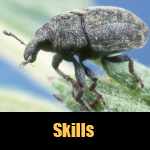
CORE SKILLS - Discussing
__________
What is a Weed Lesson Plan. In this lesson students will participate in discussions, brainstorming, skits and a learning game to discover the world of weeds, how noxious weeds out-compete native plants and why noxious weeds affect our everyday outdoor activities.
Weeds and the Outdoor World Brainstorm (60 minutes).
Native Plant Species Game (20 minutes).
Grades 4-8. Subjects: Science, Mathematics.
__________
Changing Landscapes Journey back to the time of Lewis and Clark and investigate how landscapes can change over time. In this lesson, students will use naturalist skills of drawing and mapping to explore landscapes from the past to the future. Grades 4-8. Other subjects: Science, Art, Language Arts.
Landscape of Lewis and Clark Discussion and Drawing (40 minutes)
Present and Future Landscapes Map (40 minutes)
Lewis and Clark Journal Excerpts: Landscape Map Lesson Details
Grades 4-8. Subjects: History, Science, Art, Language Arts.
Explore Your World With Lewis and Clark
__________
Be a naturalist! Lesson Plan. Explore the natural world! Use your five senses to observe the world around you. Students will learn to develop their skills as nature detectives through senses investigatons, journaling and drawing in a micro-mapping project.
Senses Investigations (45 minutes)
Micro Maps (45 minutes)
Grades 4-8. Subjects: Art, Language Arts, Mathematics, Science.
__________
There are Many Ways to Fight Weeds! Lesson Plan. What do we do about weeds? Without any natural enemies, noxious weeds can easily outcompete native plants and take over whole landscapes. These weeds are tough and don't give up easily. In this lesson students will learn about many tools we use to stop the spread of noxious weeds. Students will also create skits to demonstrate integrated weed management and participate in a journaling activity to discover how they could be "Weed Warriors."
What About Weeds Skits? (60 minutes)
Weed Warrior Journaling Activity (60 minutes)
Grades 4-8. Other subjects: Science, Language Arts, Performing Arts.
__________
Spotted Knapweed Lesson Plan. How do noxious weeds spread? Investigate seeds and the special adaptations that seeds have to spread and grow into new plants. Students will observe a variety of seeds and examine the techniques that plants use to spread their seeds. Students will also participate in a journaling activity on Spotted Knapweed to learn the tricks this plant uses to spread quickly across the landscape.Grades 4-8. Subjects: Science, Mathematics, Language Arts.
Seed Dispersal Investigation (50 minutes)
Ode to Spotted Knapweed Poem (20 minutes)
Spotted Knapweed Seed Collection and Dissection (50 minutes)
Grades 4-8. Subjects: Language Arts, Science, Mathematics.
__________
Leafy Spurge Lesson Plan. If you're standing in a patch of leafy spurge in late summer, you might hear a popping or crackling sound. This is the plant's artillery ... Discover how leafy spurge spreads and how its biological control agent, spurge hawk moth, works to try to keep the plant in check. Can the spurge be contained? Students will participate in the to answer these questions.
Leafy Spurge Bonanza (50 minutes)
Create a Fantasy Plant (30 minutes).
Grades 4-8. Subjects: Art, Language Arts, Science, Mathematics.
__________
Dalmatian Toadflax Lesson Plan. Some weeds are covered in thorns or have sharp, spiky stems and some weeds have leaves that are gray and waxy, making them look just like weds But not ll weeds are ugly! Students will determine which plants are weeds and which are not. Students will also participate in hands-on investigation of plant parts and the function of each plant.
Not All Weeds Are Ugly (25 minutes)
Plant Parts Identificaton (45 minutes)
Grades 4-8. Subjects: Science, Language Arts
__________
Yellow Starthistle Lesson Plan. Look closely at the Yellow Starthistle -- the base of each flower is guarded by long, sharp spines that poke out in all directions. Seen from above, these spines look like the points of a star. Each spine is almost one inch long and as sharp as a sewing needle. That's starthistle's way of saying, Don't touch me! Students will take a closer look at this plant and other noxious weeds through back to back drawings. Students will also learn ore about plants and the plant life cycle through flower dissections.
Back to Back Observations (30 minutes)
Plant Life Cycle and Flower Dissection (40 minutes)
Grades 4-8. Subjects: Science, Art, Language Arts.
__________
Purple Loosestrife Lesson Plan. Purple loosestrife spreads rapidly through wetlands and quickly replaces native plants. Sooon nothing but loosestrife grows there. How do we control the spread of purple loose-strife? Students will examine the use of bio-controls to limit the spread of noxious weeds in a bio-control blast!
Bio-Control Blast! Discussion and Role Play (30 minutes)
Inspiring Insects - Collection and Observation (40 minutes)
Grades 4-8. Subjects: Science, Performing Arts, Language Arts.
__________
Saltcedar Lesson Plan. Once saltcedar takes over an area, it keeps other plants out by oozing salt from its leaves. Soon, birds, animals, and even insects are driven away to look for food elsewhere. How does this plant affect habitats and ecosystems? Students will examine the impacts of saltcedar and participate in a webbing activity to understand ecosystem dynamics when saltcedar invades the landscape.
Exploring Ecosystems - Discussion and Webbing (60 minutes)
Grades 4-8. Subjects: Science, Language Arts.
__________
Leafy Spurge Activities. Science Project. Cork-like and Wax-like Plant Defenses. The lesson plan engages students in a classroom lab experiment to learn mechanisms that plants use to protect their physiology. Radio plays to enhance learning are available at Interesting Facts.
Cork-Like and Wax-like Plant Defenses (20 minuates)
Grades 4-8. Subjects: Science.
__________
Leafy Spurge Activities. Chow Down. Mapping Investigation. This lesson plan engages students in mapping exercises to learn how to survey and inventory using Global Positioning System techology. Students will understand that ecosystems differ and the differences influence the development of a land management plan. Radio plays to enhance learning are available at [[Interesting Facts[[.
Mapping Investigation (30 minutes)
Grades 4-8. Subjects: Mathematics, Geography, Science.
__________
Leafy Spurge Activities. Meet the Beetles Part One - Before and After. Part Two The lesson plan engages students in identifying, drawing, and monitoring the impacts of biological weed control insects on leafy spurge. Students will learn how to make observations and demonstrate their findings. Radio plays to enhance learning are available at Interesting Facts.
Materials, Time Consideratons, Lesson Overview, Background
Biological Control of Leafy Spurge (20 minutes)
Grades 3-6. Subjects: Science, Art.
__________
Leafy Spurge Activities. Red-headed Stranger - Before and After. The lesson plan engages students in illustrating what they think a leafy spurge plant might look like after a biological control insect is introduced. Students will understand how biological control insect points of attack weaken the host plant. Students will learn how to make observations and demonstrate their findings. Radio plays to enhance learning are available at Interesting Facts.
Insect Life Cycles and Attack Points in Weeds (20 minutes)
Grades 3-6. Subjects: Science, Art.
__________
Leafy Spurge Activities. Flying Flies - Before and After.. The lesson plan engages students in interpreting, identifying, illustrating and discussing the biology of predation by insects on host plants. Students will learn life stages of insects and predation impact on host plant populations. Radio plays to enhance learning are available at Interesting Facts.
Life Stages. Tip Gall Midge Points of Attack (20 minutes)
Grades 3-6. Subjects: Science, Language Arts.
__________
Leafy Spurge Activities. Bug Barf - Before and After. The lesson plan engages students in drawing and demonstrating insect predation on plant parts. Students will learn the biology behind the leafy spurge hawk moth and its host plant. Radio plays to enhance learning are available at Interesting Facts.
Life States. Hawk Moth Points of Attack. (20 minutes)
Grades 3-6. Subjects: Science, Language Arts.
__________
Spotted Knapweed Activities. Pineapple. The lesson plan engages students in one of several ways to identify the bracts that house the purple plumes of the spotted knapweed plant. Students learn to investigate a variety of noxious weed plant parts and reinforce an understanding by drawing and discussing spotted knapweed characteristics. Radio plays to enhance learning are available at Interesting Facts.
Plant Identification. Pineapples to Flower Plumes (15 minutes)
Grades 3-6. Subjects: Science, Language Arts.
__________
Spotted Knapweed Activities. Spoons: Seeds and their Travels. The lesson plan engages students in locating, predicting, planning, and discussing how non-native plants are introduced from other countries. Students will understand societal uses of plants for medicinal purposes, horticulture, and industry. Radio plays to enhance learning are available at Interesting Facts
Seeds and their Travels (15 minutes)
Grades 3-6. Subjects: Science, Geography, Sociology.
__________
Spotted Knapweed Activities. Pirates and the Backcountry. The lesson plan engage students in a classroom mapping exercise to travel along a route and track horse dropping to compare how recreation along trails is relevant to weed-free policies for backcountry travel. Students will learn how seeds are spread in hay and bedding used for feed and recreation. Radio plays to enhance learning are available at Interesting Facts.
Pirates of the Backcountry (15 minutes)
Grades 3-6. Subjects: Geography, Science, Language Arts.
__________
Spotted Knapweed Activities. Bike Tires, Clean off the Seeds. The lesson play engages students in role playing to act out human behavior in the outdoors. Students will learn the many ways seeds spread and understand that humans play a role in contributing to weed spread. Radio plays to enhance learning are available at Interesting Facts.
Bike Tires. Clean off the Seeds (30 minutes)
Grades 3-6. Subjects: Science, Art.
__________
Spotted Knapweed Activities. Snout Beetles and Scientific Name. The lesson plan engages students in library research project to describe the known natural world using scientific (Latin) names. Students will learn how to interpret scientific names of noxious weeds. Radio plays to enhance learning are available at Interesting Facts.
Snout Beetles and Scientific Name (15 minutes)
Grades 4-8. Subjects: Language Arts, Science.
__________
Spotted Knapweed Activities. Weed Spread in Time. The lesson plan engages students in an activity to connect time to the consideration of management strategies in specific locations. Students will learn plant characteristics and explore points of view about weed impacts in the community. Radio plays to enhance learning are available at Interesting Facts.
Weed Spread in Time (15 minutes)
Grades 4-8. Subjects: Science, Mathematics.
_________
__________
Aquatic Invasive Species
__________
Water Cycle. In this lesson students will participate in discussions, brainstorming, and hands on activities to discover the continuous movement of water on, above, and below the surface of the earth.
Water Cycle Chant (10 minutes) and Water Cycle Bracelet (25 minutes)
A Drop in a Bucket (45 minutes) and WOW The Wonders of Wetlands
Grades: All. Subjects: Language Arts, Social Studies, Mathematics.
__________
What is a Watershed?. In this lesson students will participate in discussions, brainstorming, and hands on activities to discover how stream bank disturbance can affect the shape and size of the stream bed, and impact water quantity and direction of flow.
Be A Stream (10 minutes) and Watershed Scavenger Hunt (15 minutes)
Grades: 3 and up. Subjects: Science, Language Arts, Social Studies, Mathematics.
__________
Purple Loosestrife Parts of a Plant (30 minutes) and Mapping a Wetland and Controlling Purple Loosestrife (60 minutes)
Students will be introduced to the 6 plant parts and participate in a hands-on investigation of plant parts and the function of each plant.
Grades: 1 and up: Parts of a Plant; 4 and up: Mapping a Wetland and Controlling Purple Loosestrife
Subjects: Language Arts, Science, Performing Arts.
__________
Native vs. Non-native Fish. In this lesson, students discover the features that make a fish a unique riparian animal! In a fight for survival, students will become the fish they have studied and learn how exotic species can affect native fish populations.
Fish Tales/Fish Life Cycle (30 minutes)
Fish Sorting (20 minutes) Native Species Game (30 minutes)
Grades: All. Subjects: Language Arts, Science, Mathematics.
__________
Whirling Disease. In this lesson students will participate in discussions, brainstorming and a learning game to discover what Whirling Disease is, how it spreads and how they can help prevent the spread of this parasite.
Grades. 3 and up. Subjects: Language Arts, Science, Social Studies.
__________
Eurasian Watermilfoil. Students will learn about the diversity of animal life in a pond and the interdependence among pond organisms. Students will illustrate how tolerance to water quality conditions varies among macroinvertebrate organisms and explain how population diversity provides insight into health of an ecosystem.
Grades: All. Subjects: Language Arts, Science, Mathematics.
__________
Habitat Hunters. Students will engage in a series of guided inquiry lessons to investigate relationships between organisms and the environment. Through data collection, analysis, interpretation and conflict resolution regarding local natural resource issues, students will experience the complex interactive influences of human and wildlife needs on the environment and themselves.
Carrying Capacity (50 minutes)
Habitat Assessment (45 minutes)
Pause for Poetry (30 minutes)
Grades: 4 and up. Subjects: Language Arts, Science, Mathematics, Social Studies.
__________
 :
 :
Stand Alone Media Elements Gateway to biocontrol still and motion video and graphics
for assembling in a sequence for individualized lesson plans will be available later this year.
- Content for Biocontrol in Your Backyard is provided by individual program sponsors.
- Content is formatted and uploaded by InterMedia
- The Biocontrol In Your Backyard Portal collaboration with The Bugwood Network and its
- content accessible format are sponsored by USDA Forest Service, State and Private Forestry
- Regions 1, 4, and Northeastern Area; and Forest Health Protection Technology Enterprise Team.
